
Spring Exterior Painting in Melbourne
Why Spring is the Perfect time to Paint Your Melbourne Home.
Spring-ready exterior painting in Melbourne: timing, prep and weather smarts
Spring is Melbourne’s sweet spot for exterior painting. Mornings are cool, days are mild, and there is enough light to make steady progress before summer heat pushes cure times and UV exposure to the limit. If you have peeling weatherboards, chalky render, or a façade that needs love, now is the time to plan.
At J. Parker Painting, we lean into spring because it lets us manage dew point, wind, and UV with far less risk. That means fewer defects, better adhesion, and cleaner results on heritage trims, weatherboards, and rendered walls. Add a tidy site and neighbour-aware scheduling, and you get a smooth, low-stress repaint.
Below, we share our timing playbook, what “scrape to a sound edge” really means, why flexible acrylics and UV-stable topcoats matter, and how we stage access for Preston, Northcote, Fitzroy, and inner-east terraces.
The best time to paint outside in Melbourne
Mild, dry days with stable temperatures are ideal. In Melbourne, that typically means spring and early autumn. We start mid-morning once surfaces have warmed above the dew point and any overnight moisture has lifted. Afternoons are for finishing coats that need consistent warmth and low wind for a clean lay-off.
Temperature: aim for the product’s recommended range, often 10 to 30°C.- Dew point: we avoid painting when surface temperature is within about 3°C of the dew point.
- Wind and dust: light breeze is fine; strong, dusty winds are not.
- UV: we work in the shade where possible or follow the sun so coatings do not skin too fast.
If you are targeting summer curb appeal, booking spring is the smart move.
Prep that lasts: scrape to a sound edge
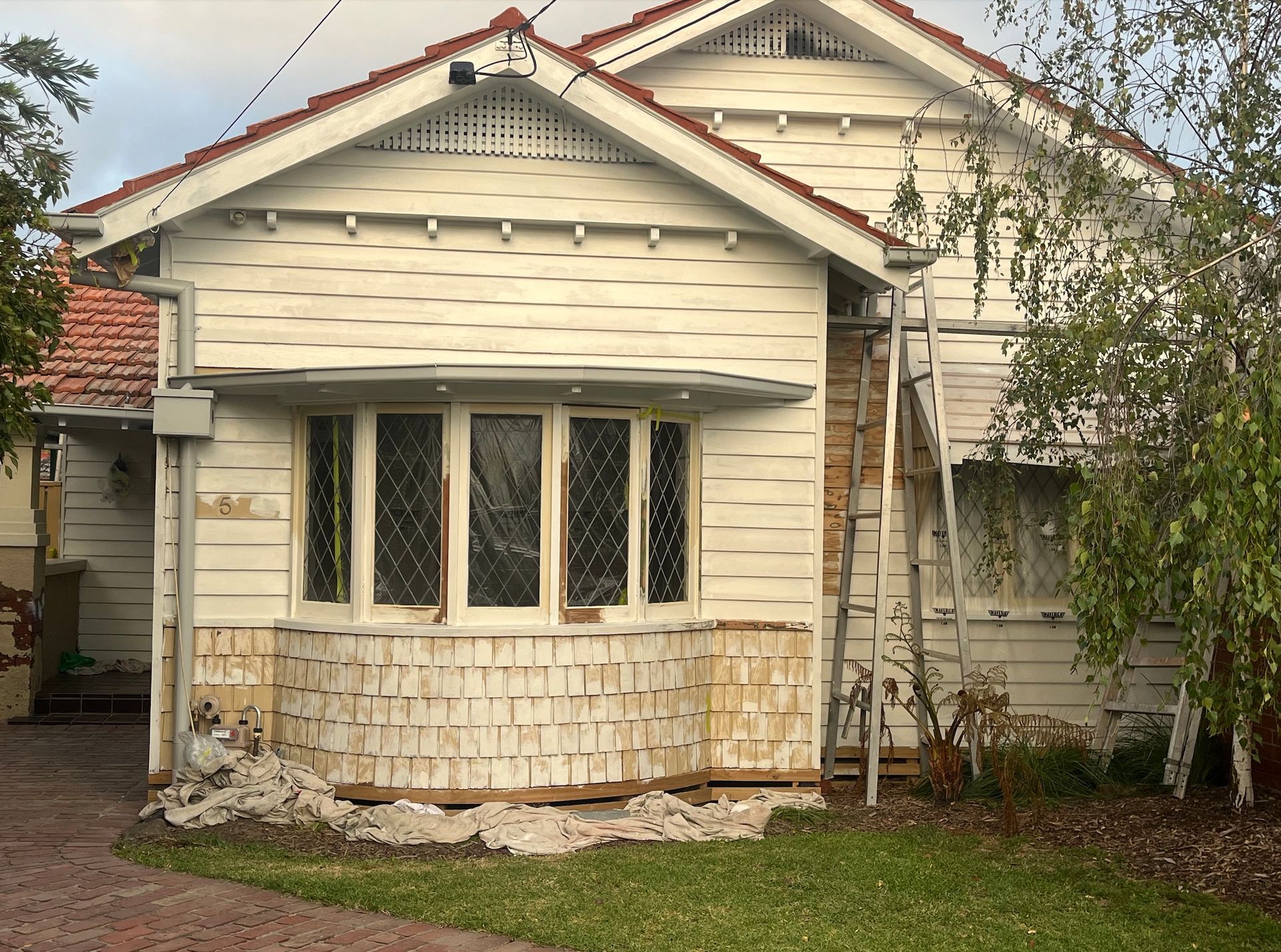
Preparation is where durability starts. “Scrape to a sound edge” means removing all loose and flaking paint until only firm, well-bonded coating remains. We then sand, feather, and prime those edges so they disappear under topcoats. On weatherboards, we often brighten greyed timber with oxalic acid, seal exposed end grain, and spot-prime bare patches. For ironwork, we treat rust before priming. On render, we cut out failed areas, bridge hairline cracks with appropriate compounds, and stabilise before coating.
Sound prep helps coatings flex with Melbourne’s temperature swings, resist moisture, and read dead-flat in low sheen. It is the difference between a one-season tidy-up and a finish that carries you through many winters.
The right system: flexible acrylics and UV-stable topcoats
Weatherboard homes benefit from flexible acrylic systems that move with timber and resist cracking. Rendered façades do well with elastomeric or vapour-permeable coatings that bridge hairline cracks and let walls breathe. For doors and trims, selected water-based or oil-based enamels provide hardness and wipeability.
UV-stable topcoats protect colour and sheen on sun-exposed north and west faces. In Melbourne, that extra UV resistance shows in year three and beyond when cheaper systems can chalk or fade.
Weather smarts: dew point, wind, and UV
We bring moisture meters and check dew point to plan when to start and when to pause. If a cool change is rolling in, we may switch to sheltered elevations or detail work that will cure safely. Wind forecasts influence masking setups, atomisation choices, and whether we roll instead of spray. UV calls the pace on glossy trims and deeper colours. Managing these variables prevents blistering, flashing, and tacky cures.
Roll or spray for exterior work?
Both have a place. Rolling with brushes for cutting-in offers control, low overspray risk, and excellent film build on textured boards and trims. Airless spraying shines on large, uniform areas and complex profiles, delivering a consistent finish fast, especially after thorough masking. We often use a spray-then-back-roll approach on weatherboards to drive paint into grain, followed by detail work by brush. The best method depends on substrate, access, wind, and neighbour proximity.
Suburb-flavoured checklist: Preston, Northcote, Fitzroy terraces
Each suburb brings quirks. Here is how we plan.
Preston: weatherboard pockets and mixed brick. Expect sanding dust control, careful garden protection, and flexible acrylic systems on boards. Good access on many blocks, so staging is efficient.- Northcote: sun-exposed north and west elevations. Prioritise UV-stable topcoats, thorough gap filling, and regular checks on sills and end grain. Laneway boundaries call for neighbour-friendly scheduling.
- Fitzroy terraces: tight access, ornate trims, periodic lead-safe prep on pre-1970s coatings. Compact scaffold or boom lifts, wrap-ready edge protection, and careful masking. Elastomeric systems help on older render with hairline cracking.
Working across Kew, Hawthorn, and Camberwell too, we match systems to streetscapes and manage access so gardens and neighbours stay happy. If you are exploring options in the inner east, see how we handle heritage and residential work in Camberwell by browsing our residential painting page.
Tight-access laneways and heritage trims: scaffold and boom-lift planning
Access is a quality decision. For delicate fretwork, sash windows, or long stretches of trim, scaffold with full edge protection enables meticulous prep and safe, repeatable brushwork. In narrow lanes or where ground contact must be minimal, a compact boom lift lets us reach high gables and parapets with precision. We coordinate permits, protect driveways and paths, stage deliveries, and pack down nightly. Neighbours get clear timeframes; gardens get breathable covers and safe walkways.
How often should you repaint?
Typical exterior cycles in Melbourne vary with exposure and prep quality:
Weatherboards: often 7 to 10 years.- Rendered façades: often 8 to 12 years with the right system.
- Ironwork and metal: often 5 to 8 years.
- Decks and thresholds: inspect yearly, re-coat as needed.
Regular checks for chalking, hairline cracks, and exposed timber can extend cycles through timely touch-ups.
Estimating an exterior paint job
Accurate pricing comes from an onsite assessment. We look at substrate type, prep level, repairs, access and height, number of coats, colour changes, and whether heritage details or lead-safe methods apply. Scaffolding or boom lift needs and neighbour constraints affect staging. After inspection, we outline scope, systems, and timing in a clear, no-pressure quote and include a free colour chat.
For context and to explore our residential approach, you can review our services for Camberwell homes and trims, including exteriors and heritage details.
Quick FAQ
- What is the best time of day to paint outside? Mid-morning start after dew lifts, with finish coats placed so they cure in stable afternoon warmth. Avoid painting late as temperatures drop toward the dew point.
- What time of year is best to paint? In Melbourne, spring and early autumn offer mild temperatures and steady drying conditions.
- How often should a house be repainted? Weatherboards often 7 to 10 years, rendered façades 8 to 12 years, metal 5 to 8 years; exposure and prep quality can shift these ranges.
- Is it better to roll or spray exterior paint? It depends. Rolling and brushing give control and film build; spraying is efficient on large or intricate profiles. Often we combine methods for the best result.
- How do you estimate an exterior paint job? Start with an onsite assessment to measure scope, prep, repairs, access, coats, and finishes. From there, we provide a written scope and price with product systems and timing.
Ready to plan your spring repaint?
Lock in a spring slot now, secure the right access plan, and make colour decisions with confidence. Book a free onsite quote and colour chat with Jason and the team. We work across Melbourne’s inner city and northern suburbs, including Preston, Northcote, Fitzroy, Kew, Hawthorn, and Camberwell. If you are planning in Hawthorn, you can request a free onsite painting quote, or explore how we handle scaffolding and elevated access for Hawthorn exteriors to see our approach.
Summary: Spring offers mild, reliable conditions that help coatings bond and cure well. Combine sound prep, flexible acrylics on weatherboards, UV-stable topcoats, and smart access planning to protect details and keep neighbours happy. Get in touch for a free, no-obligation quote and colour chat, and let us map the ideal schedule for your home.
Internal links:
Explore residential painting in Camberwell: https://www.jparkerpainting.com.au/residential-painting- Request a Hawthorn free onsite painting quote: https://www.jparkerpainting.com.au/hawthorn-painting-quote
- See our Hawthorn exterior access approach: https://www.jparkerpainting.com.au/hawthorn-exterior-painters
- Get a Fitzroy free onsite painting quote: https://www.jparkerpainting.com.au/fitzroy-painting-quote